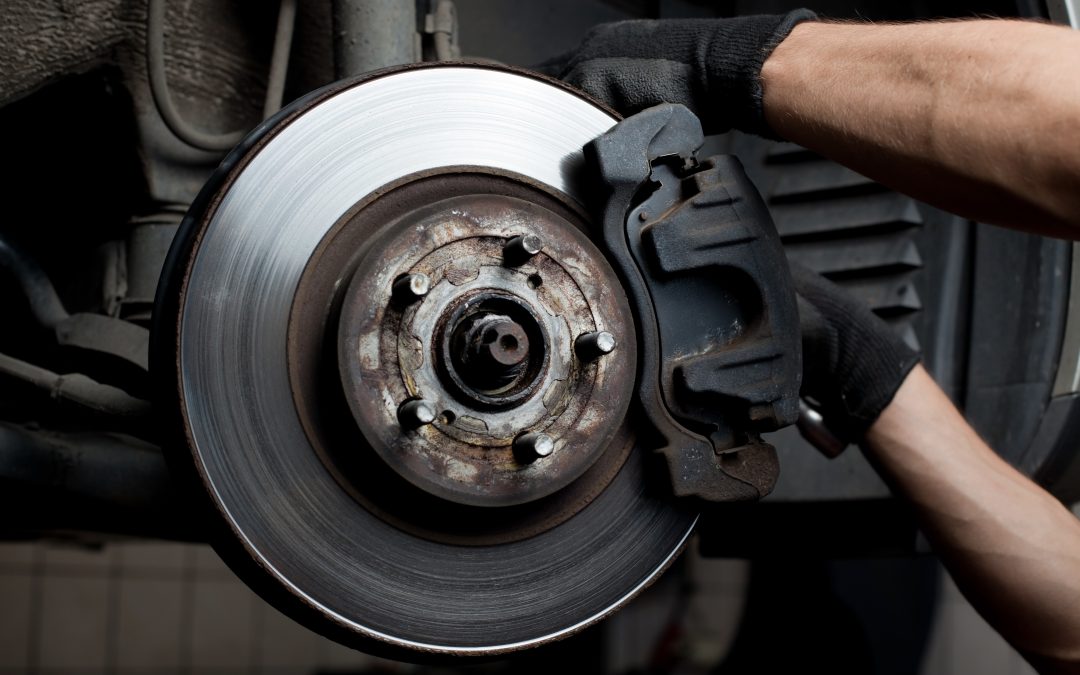
Your brakes are the most important safety system on your vehicle. They are also one of the most overlooked until something goes wrong. Understanding how your brakes work, what they need to stay in good condition, and what warning signs to watch for is one of the simplest ways to protect yourself and everyone else on the road.
How Your Brake System Works
Most vehicles use a hydraulic disc brake system on all four wheels, or disc brakes on the front and drum brakes on the rear. Here is how the process works from the moment you press the pedal:
- You press the brake pedal, which activates the master cylinder and sends hydraulic pressure through your brake lines.
- That pressure pushes the brake caliper to squeeze the brake pads against the rotor on each wheel.
- The friction between the pads and the rotor slows the wheel and brings the vehicle to a stop.
- The harder you press the pedal, the more pressure is applied and the faster you stop.
Every component in that chain matters. If any part of the system is worn, leaking, or out of spec, your stopping distance increases and your safety margin shrinks.
The Main Components of Your Brake System
Knowing what each part does helps you understand what your technician is talking about when they give you a brake recommendation.
- Brake pads: the friction material that clamps against the rotor to slow the wheel. Pads wear down over time and need to be replaced before they wear through to the metal backing plate.
- Brake rotors: the metal discs that the pads clamp against. Rotors can warp from heat or wear thin over time, both of which affect braking performance and can cause vibration.
- Brake calipers: the hydraulic clamps that hold the pads and squeeze them against the rotor. Calipers can stick or seize, causing uneven wear or dragging brakes.
- Brake fluid: the hydraulic fluid that transfers pressure from the pedal to the calipers. Fluid absorbs moisture over time, which lowers its boiling point and reduces braking effectiveness.
- Brake lines and hoses: the lines that carry fluid from the master cylinder to each wheel. Leaks or damage here can cause a sudden and significant loss of braking power.
- Master cylinder: the pump that pressurizes the fluid when you press the pedal. A failing master cylinder can cause a soft or spongy brake pedal.
Warning Signs Your Brakes Need Attention
Your brakes will tell you when something is wrong if you know what to listen and feel for. Do not ignore these signals.
- Squealing or squeaking when braking: most brake pads have a small metal wear indicator that creates this sound when the pad is getting low. It is designed to get your attention before the pad wears out completely.
- Grinding noise when braking: this usually means the pad has worn through and metal is contacting the rotor. This is an urgent situation that typically means both pads and rotors need replacement.
- Vibration or pulsing in the pedal or steering wheel when braking: this is a common sign of warped rotors.
- Pulling to one side when braking: this can indicate a stuck caliper, uneven pad wear, or a brake fluid issue on one side of the vehicle.
- Soft, spongy, or low brake pedal: this often points to air in the brake lines or a brake fluid leak and needs immediate attention.
- Longer stopping distances than usual: if your vehicle takes noticeably longer to stop, your braking system is not performing at full capacity.
- Brake warning light on the dashboard: this light can indicate low brake fluid, a sensor issue, or a problem with the system. It should not be ignored.
If you are hearing something unusual when you slow down, our post on why your car makes noise when you brake breaks down the most common sounds and what each one typically means.
How Often Should You Have Your Brakes Inspected?
Brake wear depends on how and where you drive. Stop-and-go city driving wears pads faster than highway miles. Heavier vehicles put more stress on brake components than lighter ones. Here are general guidelines to follow:
- Have your brakes visually inspected at every oil change or tire rotation. A quick look at pad thickness and rotor condition takes just a few minutes and catches problems early.
- Most brake pads last between 30,000 and 70,000 miles depending on driving habits, vehicle weight, and pad material.
- Rotors typically last through two sets of brake pads but should be measured at every brake service to confirm they are still within safe thickness specifications.
- Brake fluid should be tested for moisture content every two years and replaced when moisture levels are too high.
These are starting points, not hard rules. Your technician can tell you exactly where your brakes stand based on what they measure and see during an inspection.
Front Brakes vs. Rear Brakes: Why They Wear Differently
Front brakes do significantly more work than rear brakes. When you stop, the weight of the vehicle shifts forward, which puts more load on the front wheels. As a result, front brake pads typically wear two to three times faster than rear pads. This is why it is common to replace front brakes more frequently than rear brakes, and why each axle should be inspected and measured separately rather than assumed to be in the same condition.
What Happens If You Ignore Worn Brakes?
Putting off a brake service when it is needed creates problems that compound quickly.
- Worn pads that reach the metal backing plate will damage your rotors, turning a pad replacement into a pad and rotor replacement.
- Damaged rotors that go unaddressed can compromise the caliper, adding another component to the repair.
- Low or contaminated brake fluid reduces your ability to stop in an emergency.
- A stuck caliper causes the brake on that corner to drag constantly, generating heat and accelerating wear on the pad and rotor.
In nearly every case, catching a brake problem early costs less than waiting. A set of brake pads is a fraction of the cost of pads, rotors, and a caliper combined.
Schedule a Brake Inspection at CAR Tire & Auto Center
If it has been a while since your brakes were looked at, or if you are noticing anything that does not feel or sound right, our team is here to help. We inspect brakes at all three of our locations in Madison Lake, Edina, and Waseca. We will measure your pad thickness, check your rotor condition, inspect your fluid, and give you a clear picture of where your brakes stand.
Schedule your brake inspection today at the CAR Tire & Auto Center nearest you. We are your neighborhood choice in honest and trusted car care.