You know the feeling. You press the brake pedal and your car answers back with a sound you were not expecting. Maybe it is a squeal, maybe it is a grinding that you feel as much as you hear, or maybe it is a clunk that happens every single time you slow down.
The good news is that brake noises are your car’s way of talking to you. The not-so-good news is that most of them mean something that is worth paying attention to. Some are minor. Some are urgent. And a few mean you should not wait another day.
Here is what each noise is trying to tell you.
That High-Pitched Squeal: What It Usually Means
A squealing sound when you brake is one of the most common things we hear from customers, and nine times out of ten, it means your brake pads are getting low.
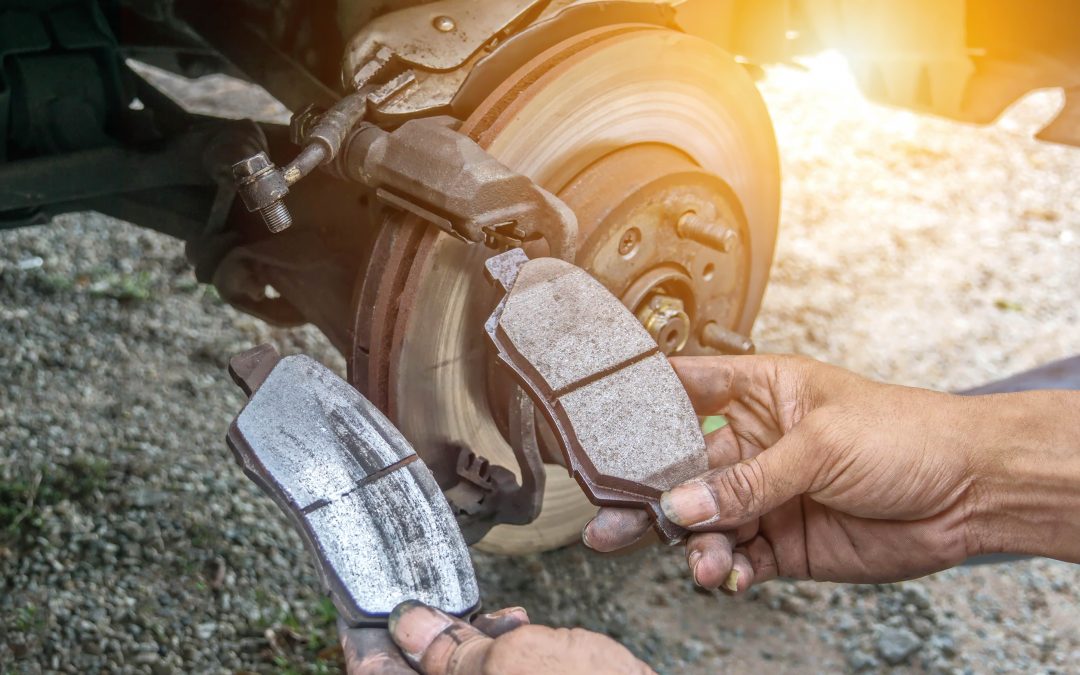
Most brake pads are built with a small metal wear indicator. When the pad wears down to a certain point, that indicator starts to make contact with the rotor and creates that high-pitched squeal. It is designed to do exactly that, to get your attention before the situation gets worse.
- If you hear squealing consistently when braking, your pads likely need to be replaced soon
- Occasional squealing in the morning or after rain can be normal, surface rust on the rotors clears after a stop or two
- If the squeal happens every time you brake, do not ignore it
The fix at this stage is usually straightforward. Waiting turns a pad replacement into a pad and rotor replacement, which costs significantly more.
A Grinding Sound: This One Is More Urgent
If squealing is your car saying ‘hey, pay attention,’ grinding is your car saying ‘we have a problem right now.’
Grinding typically means the brake pads are worn completely through and metal is making contact with metal. Your rotor is being damaged with every stop. This is both a safety issue and a cost issue, because the longer you wait, the more expensive the repair becomes.
- Grinding that gets worse over time is almost always metal-on-metal contact
- You may also feel a vibration in the brake pedal or steering wheel
- If you are hearing grinding, schedule a brake inspection as soon as you can
In some cases, a small stone or road debris can get lodged between the pad and rotor and cause a grinding sound that goes away on its own. But if it does not clear up within a day or two, get it checked.
A Clunking Noise: This Could Be Something Bigger
A clunk when you brake, especially a single clunk each time you press the pedal, is worth taking seriously. Clunking sounds often point to something loose or worn in your brake system or suspension.
- Loose brake hardware or a worn caliper bracket can clunk when the brakes engage
- Worn sway bar links or ball joints can also clunk under braking as the weight shifts forward
- A loose brake caliper is a more serious issue and should be inspected right away
Clunking noises are harder to diagnose without looking at the vehicle, so this is one where coming in for an inspection is the right move. It is rarely something you can identify from the sound alone.
A Scraping Sound: Usually Means Debris or Severe Wear
Scraping is similar to grinding but often has a slightly different quality, more like something dragging than metal-on-metal contact. This can be caused by a worn dust shield making contact with the rotor, debris stuck in the wheel area, or brake pads that have worn unevenly.
- A bent dust shield can scrape the rotor and is usually a simple fix
- If you recently drove through deep water, mud, or road debris, check if the sound clears up after a few stops
- If it does not go away, have it looked at before it becomes a rotor issue
A Soft or Spongy Pedal: Not a Noise, But Do Not Skip This
This one is not a sound, but it belongs in this conversation because people often ask about it at the same time. If your brake pedal feels soft, spongy, or travels further than it used to before engaging, that is a sign of a possible issue with your brake fluid or brake lines.
This is not something to wait on. A spongy pedal affects your stopping distance and should be inspected promptly.
Does It Matter When the Noise Happens?
Yes, actually. When a noise occurs can help narrow down what is going on.
- Noise only when first braking in the morning: often surface rust burning off, usually normal
- Noise every time you brake: the wear indicator, metal contact, or hardware issue
- Noise only at low speeds: could be debris, a stuck caliper, or uneven pad wear
- Noise with vibration: often points to warped rotors
- Noise that comes and goes: harder to diagnose, but still worth mentioning at your next service
How Long Do Brake Pads Actually Last?
It depends on how and where you drive. City driving with frequent stops wears pads faster than highway driving. Most brake pads last between 30,000 and 70,000 miles, but that range is wide for a reason.
- Heavy stop-and-go traffic shortens pad life significantly
- Driving in hilly areas puts more demand on your brakes
- Towing or carrying heavy loads accelerates wear
- Having your brakes checked regularly is the best way to catch wear before it becomes a noise
When Should You Come In?
Here is a simple way to think about it:
- Squealing when you brake consistently: schedule an appointment this week
- Grinding: come in as soon as possible, this week if you can
- Clunking or scraping: come in and let us take a look
- Spongy pedal: do not wait, this affects how well your brakes work
- Occasional squeal on a wet morning that goes away: keep an eye on it, mention it at your next oil change
If you are not sure, that is okay too. Bring it in and tell us what you are hearing. We would rather take a look and tell you everything is fine than have you driving around wondering.
We Are Here to Help You Feel Confident About Your Car
Brake questions are some of the most common things we talk through with customers every single day. You are not bothering us by asking, and you are not overreacting by getting it checked.
A brake inspection does not take long and gives you real answers. If something needs attention, we will show you what we found and talk through your options honestly. If everything looks fine, you will drive away knowing that.
CAR Tire & Auto Center serves Madison Lake, Waseca, and Edina. Stop in, give us a call, or schedule an appointment today. No drama, no pressure, just straight answers.